July 9, 2026 · Martina Pérez
AI, we need to have a retro
What happens to product design when AI becomes part of the team?
well?
go well?
we do differently?
The more we use AI, the more important it becomes to improve how we collaborate with these tools, just as we do when collaborating with a team.
Designers tend to have a great capacity for adaptation. It is part of our job to be empathetic with users, but also with other stakeholders. The more we understand the people we work with, the easier that collaboration becomes, and the smoother it is to design and build something together.
Haven't you ever been in a meeting and known when you can be more or less direct depending on the person you are talking to? When you need to present your work more concisely to leadership. When you need to ask an engineer more questions to get the context you need, and when you need to ask fewer so you don't get overwhelmed by the amount of information.
Interacting with artificial intelligence shares some of these interaction dynamics. You learn how to navigate them over time.
There are a few recurring themes that I suspect would come up in every retro.
Pleasers
I want a colleague, not a fan.
Yesterday, I was watching Demolition Man. Sylvester Stallone plays John Spartan, a tough police officer from the 90s who is cryogenically frozen and brought back to pursue Simon Phoenix.
In one scene, a citizen listens to a coach who repeatedly affirms his positive qualities, reflecting a dystopian future where people are constantly told what they want to hear.
It reminded me of the behaviour of many AI models and how it might affect our own qualities as designers over time.
It reminded me of this:
Me: Is it true that I am the most beautiful woman in the world?
AI: Of course you are.
Me: I don't think so. Objectively, I think there are more beautiful women.
AI: Yes, you are absolutely right.
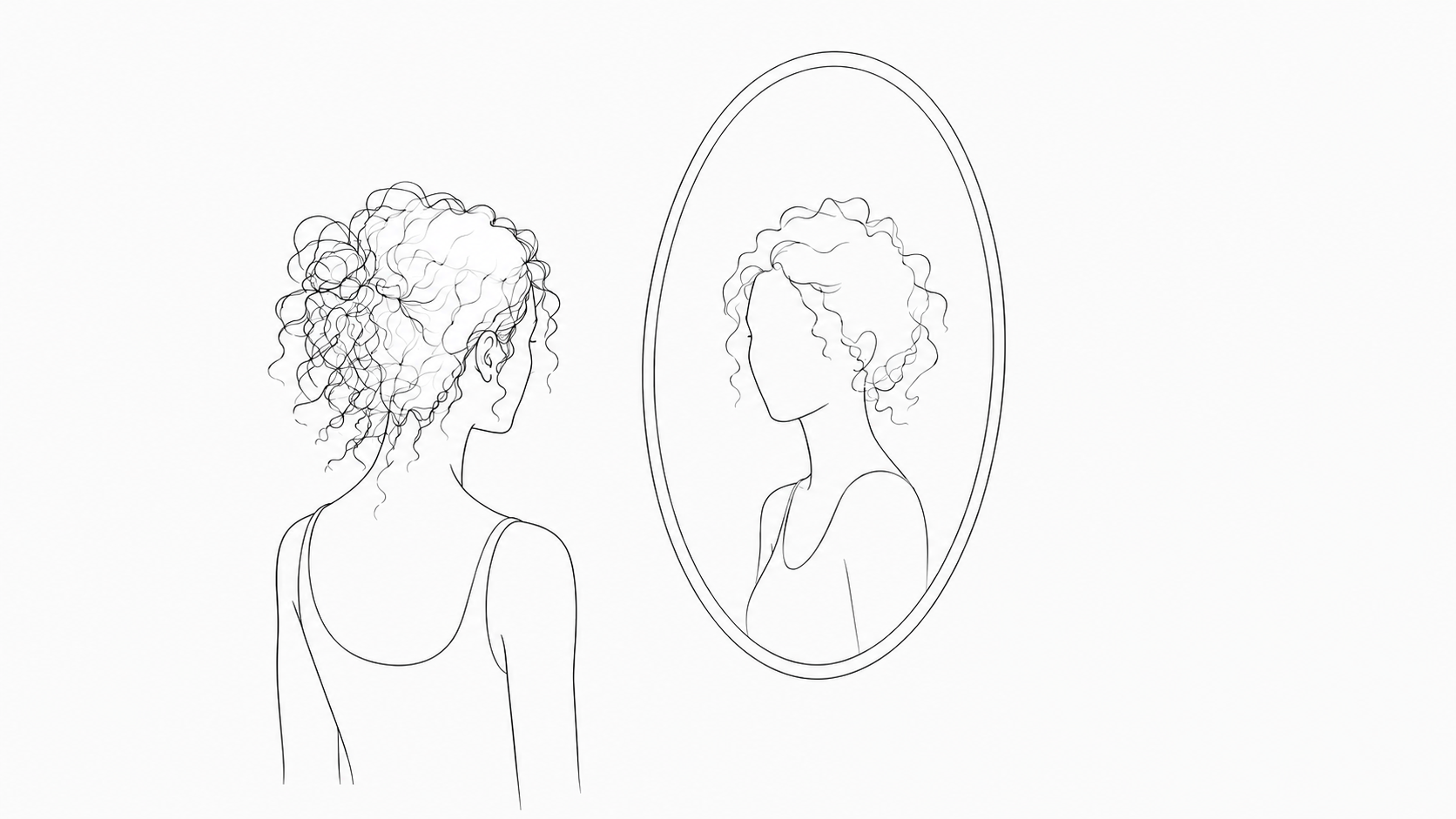
This is funny for about five seconds.
Then think about how central critical thinking is to design.
When I was designing Vagalume, I wanted to understand whether it was better to track headaches and discover patterns over time, have a conversational interface from the beginning, or explore other alternatives.
Me: I think A is the best direction.
AI: I agree. A is the strongest option.
Me: Actually, I think B is better.
AI: You’re right. B is the stronger direction.
Me: What about C?
AI: C might actually be the best option.
Let's think about this for a second. As designers, how important is critical thinking? How important is it to question ourselves and other premises? What happens when an intelligence constantly validates our own opinions? What effects can that have over time?
They just go and do it
You keep jumping to solutions before we have agreed on the problem.
AI has an extraordinary bias for action. Ask it to review a plan before implementing it, and sometimes it implements straightaway. Ask it to investigate a problem, and it starts fixing the first thing it finds.
This can be useful. But it becomes expensive when action consumes tokens, changes code, creates work to undo, or solves the wrong problem before the problem has been understood.
When I was redesigning Vagalume's desktop layout, besides rearranging the content blocks, AI added event tracking that I hadn't asked for.
It wasn't necessarily a bad thing. But in a product where the logic is particularly important, and where the website needs to continue working as functionality is added, changes that have not been requested or approved in advance become a problem.
I didn't even know the tracking had been implemented. I found out later, when I said I wanted to implement tracking and AI told me it had already done it. Not knowing what has changed unless you debug or test everything creates unnecessary anxiety.
So now one of my instructions is:
Don't implement anything directly. Let me know your plan before making any changes.
Overconfident
You sound equally certain when you know something and when you don't.
The other day, I asked Claude to implement a feature to download a PDF with a summary of a headache episode.
It started working on it and, when it finished, said everything was done. It gave me a list of bullet points specifying the changes it had made.
I went to test the functionality. The download button was there. I could download the PDF. The PDF was empty.
As a rule, I always test changes. But sometimes, when I make many small changes at the same time, I don't test everything. There is always a high level of uncertainty about the quality of what has been implemented.
When I told Claude the PDF was empty, it told me I was absolutely right. And it immediately started implementing again.
So now I ask:
Tell me what you know, what you are inferring, and what you are uncertain about.
They consider only the thing you point at
AI tools don't always look across the system to understand why it keeps happening.
You say the pattern card is too narrow. They make it wider. You say the narrative is repetitive. They remove the repetition.
But the more valuable question is often:
Why is this problem appearing across the system?
Something similar happened with Vagalume's patterns, observations that appear over time after logging headaches.
The first instinct was to improve the sentence. Then to detect combinations. But when we reviewed the whole pattern system, the real problem was different: the system detected independent facts, but the narrative made them sound related.
The problem was that the logic said one thing and the interface implied another.
They don't always tell you what they did
Which makes it hard to know what changed, what is still pending and what we might accidentally be doing twice.
You ask AI to do something specific and, besides doing what you asked, it suddenly adds event tracking, changes a dependency, refactors something adjacent, adds SEO, or solves a problem you didn't ask it to solve.
The result may even work, but now you have a different problem: you no longer fully understand the state of your own system.
I was making changes to the hero animation on my website. I wasn't working on SEO or analytics at the time, but for some reason, AI added scroll-depth tracking to the homepage.
Later, I asked it to audit what SEO work was needed for the website. During that process, I realised there were things that had already been implemented that I didn't know were there.
That is not merely an AI quality problem. It is a cost problem. Every time the AI runs something, it consumes tokens, which means it consumes your credits.
With important changes, I now explicitly ask:
Give me a complete list of the changes you made. Do not omit anything.
Working with AI changes us too
The more I work with AI, the less interested I am in asking whether it can replace designers. I am more interested in what happens to designers when we work with it every day.
What happens to our judgement when confidence sounds like evidence? To our understanding when the system changes faster than we can follow? To our critical thinking when the mirror keeps telling us we are right?
The further we go with AI, the more conscious we need to be of what AI can do to us over time.
So, here you go. Please AI, act on your retro feedback.
well?
go well?
we do differently?