July 4, 2026 · Martina Pérez
If you build it…
Three assumptions about the limits of AI and designers, and how building changed my mind.
At the beginning of 2026, I was quite sceptical about using AI to build websites. I didn't believe I could build something logical and functional by myself.
The second point I was sceptical about was conceptual design. AI might be good at generating a basic layout, but what happens when you want something slightly abstract? And how differently can you define an experience for desktop and mobile? Can you build something where, on desktop, you use keyboard controls, but on mobile, you use your fingers to move a boat and its sails?
So, this year, I started building things to find out.
Each project allowed me to experiment with something different. Product logic, generative animations, workflow automation, colour models, physics simulations, and different interactions for desktop and mobile. I wanted to understand the limits of the technology.
Vagalume
Building something that feels like a product
Vagalume is a project that started with my interest in testing all these AI tools and understanding how far I could go building a functional website by myself, with real logic and complexity.
It is a web app that allows you to track headaches and uncover patterns over time.
Vagalume is probably the project that taught me the most. The prototype wasn't a prototype. It was the product itself. I built the concept first with Lovable, then designed the logic, mostly using GitHub Copilot. Then, at a later stage, I refined the UI and visual design, information architecture and content with Lovable and Claude.
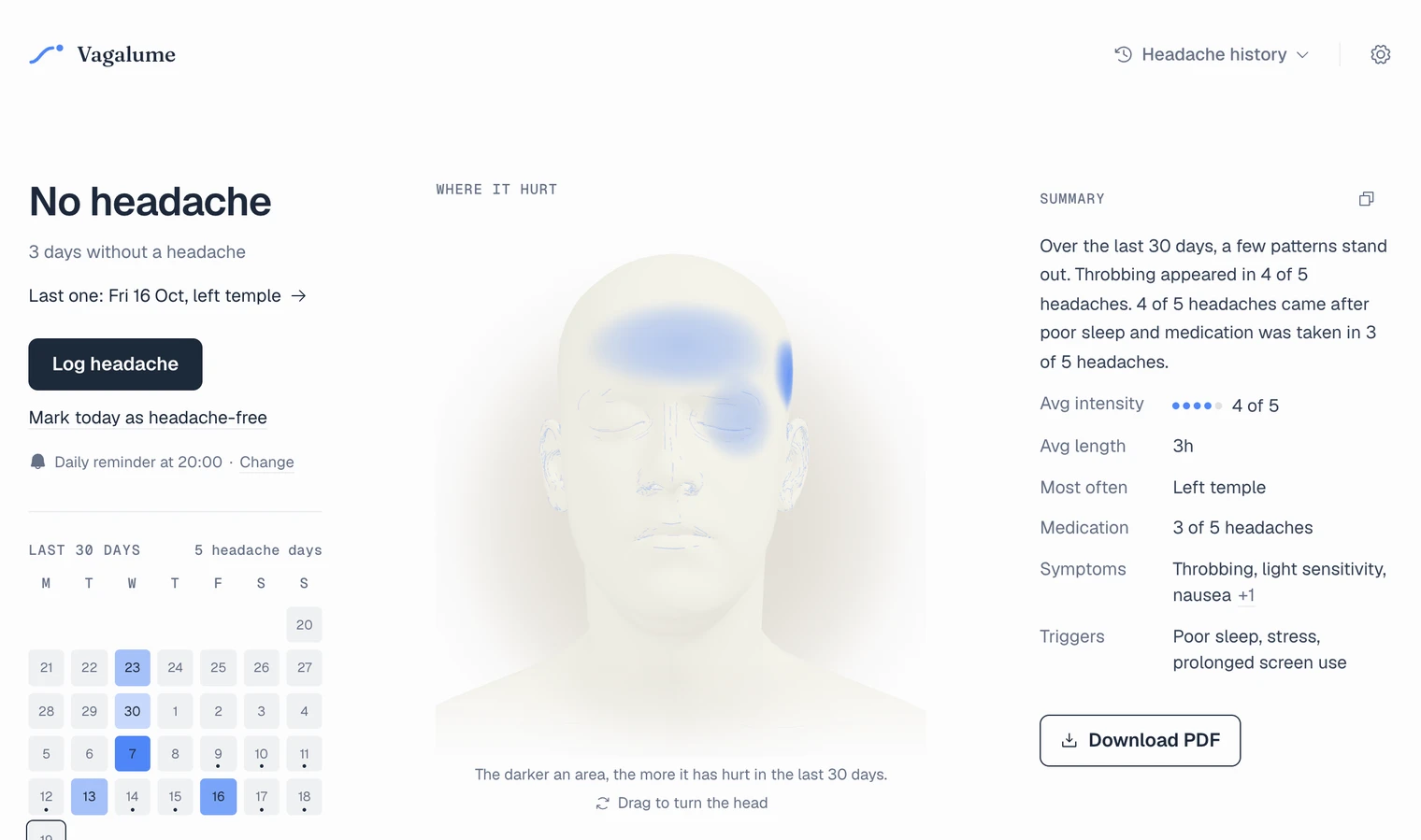
I realised it was becoming something more complex when I defined the logic for discovering patterns and the threshold: how long should the system wait before showing patterns to the user? The product had become complex enough that testing visual states required manipulating the underlying data.
I also added summaries of headache episodes when the user made updates to their symptoms throughout the day. This was the moment when it started feeling like there was real product logic behind it.
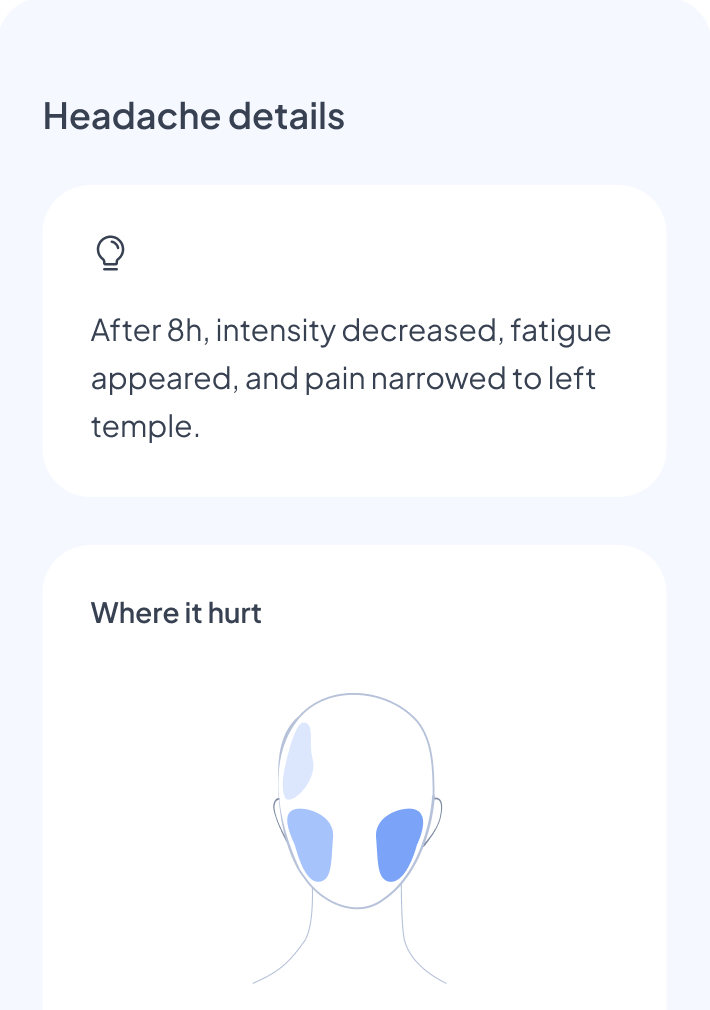
I started to understand when to use one AI tool or another depending on what I wanted to do. GitHub Copilot was better for quick changes and adding logic. Lovable was better for UX and visual design improvements.
I initially built Vagalume mobile-first. Later, the data told me that users were using it more on desktop, so I started redesigning the desktop experience. I used Claude to iterate and explore different versions of the design and see how they worked in different states: the empty state, when you have some data, and when you have a lot of data.
I was in exploration mode. I wanted to see it and interact with it directly in the browser. In Figma, when you zoom out, it can look like the design is going to work. But when you see it in the browser at its real size, with different combinations depending on the volume of data displayed, you see that it really doesn't. It was faster to test this directly by implementing it than duplicating screens in Figma and trying to reproduce all the possible states.
Every time I added more functionality, I thought about the next thing I could add. In fact, I started by tracking headaches and ended up building another experience to track pain in the body.
It has many layers and levels, and you can work on it from different angles: logic, functionality, habit building, onboarding, visual design.
Of everything I built this year, it is the one that feels most like a product.
Sail Away
When theory and perception are different
I love sailing. Last year, I got my sailing certificate. This year, I started dinghy sailing. I wanted to learn how the force and direction of the wind affect the sails, the speed of the boat and its stability. I wanted to internalise concepts like heading up, bearing away and the direction of the boat in relation to the wind: beam reach, close-hauled, etc.
This minigame was built with ChatGPT, Lovable and Claude.
I used Lovable for the visual part and the foundations of the game. ChatGPT helped me with all the physics logic and with making sure the concepts were solid and made sense.
Later, for other changes, such as adding new features or a sitemap for SEO, I used Claude, always connected to the GitHub repository so I could see the changes easily through Lovable.
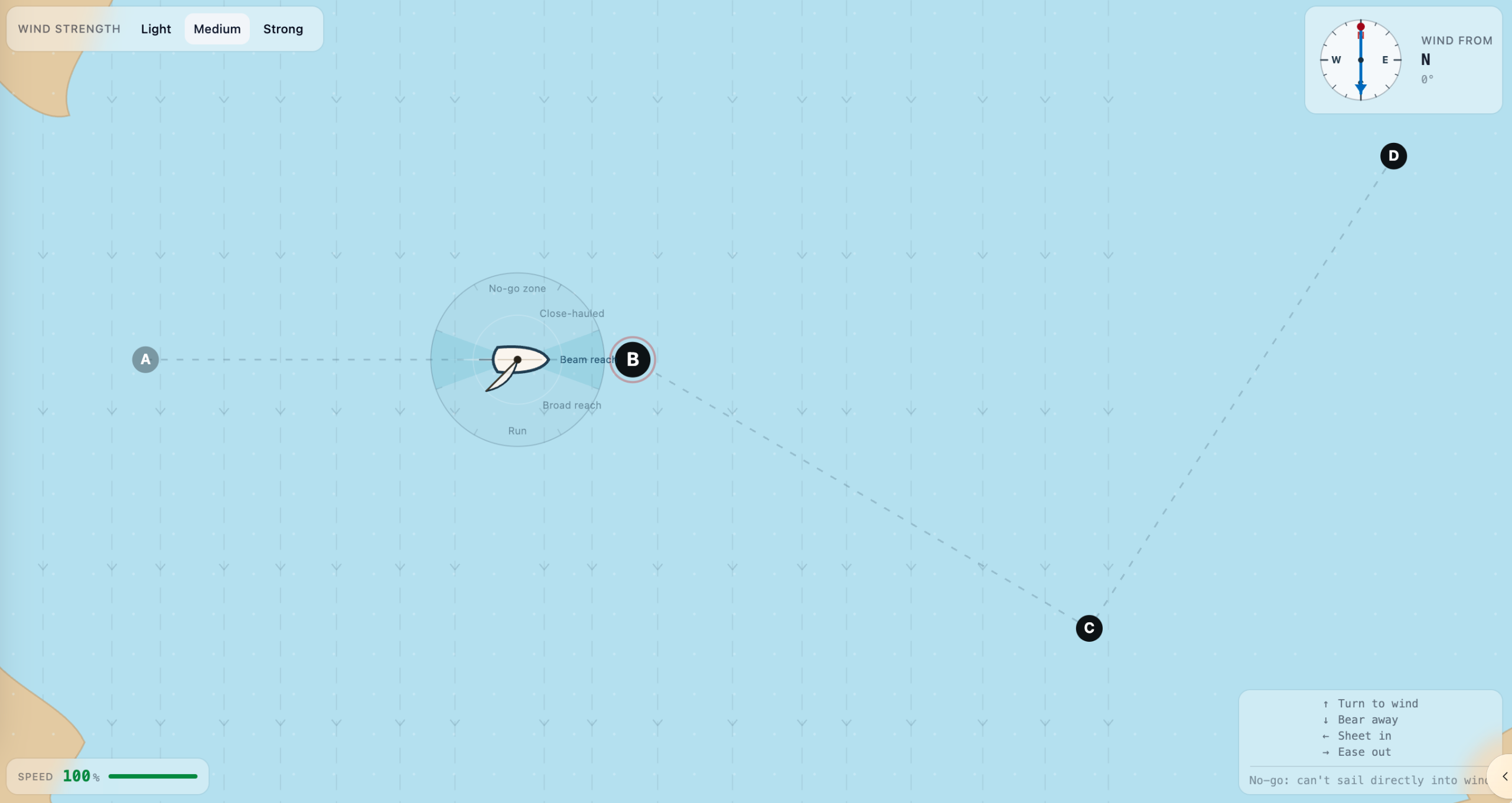
What was most difficult were the small details. I had to find the right visual relationship to show the effects of changes in wind direction and force on the boat. The theory was different from the practice. Even if the physics were more or less correct, the user's perception was not the same.
I needed to make adjustments so that the interaction and the sensation of the force of the wind made sense visually. For example, I reduced the wind speed from what the theory supposedly said it should be. Visually, it produced anxiety. At first, I wanted the sail to move much more clearly. I wanted the user to understand how the heading and force of the wind affected the sail. But then I realised that, for the purpose of learning, it was enough for the user to know how to position the sail to reach maximum speed and get to the destination.
I also wanted something more realistic where the boat would capsize when you did something wrong. But in a 2D simulation, this became a challenge, so I lowered my own expectations.
Lovable also had a tendency to add controls in a rudimentary way. For example, the direction of the wind was initially a slider. I kept iterating until I had a compass that you could rotate.
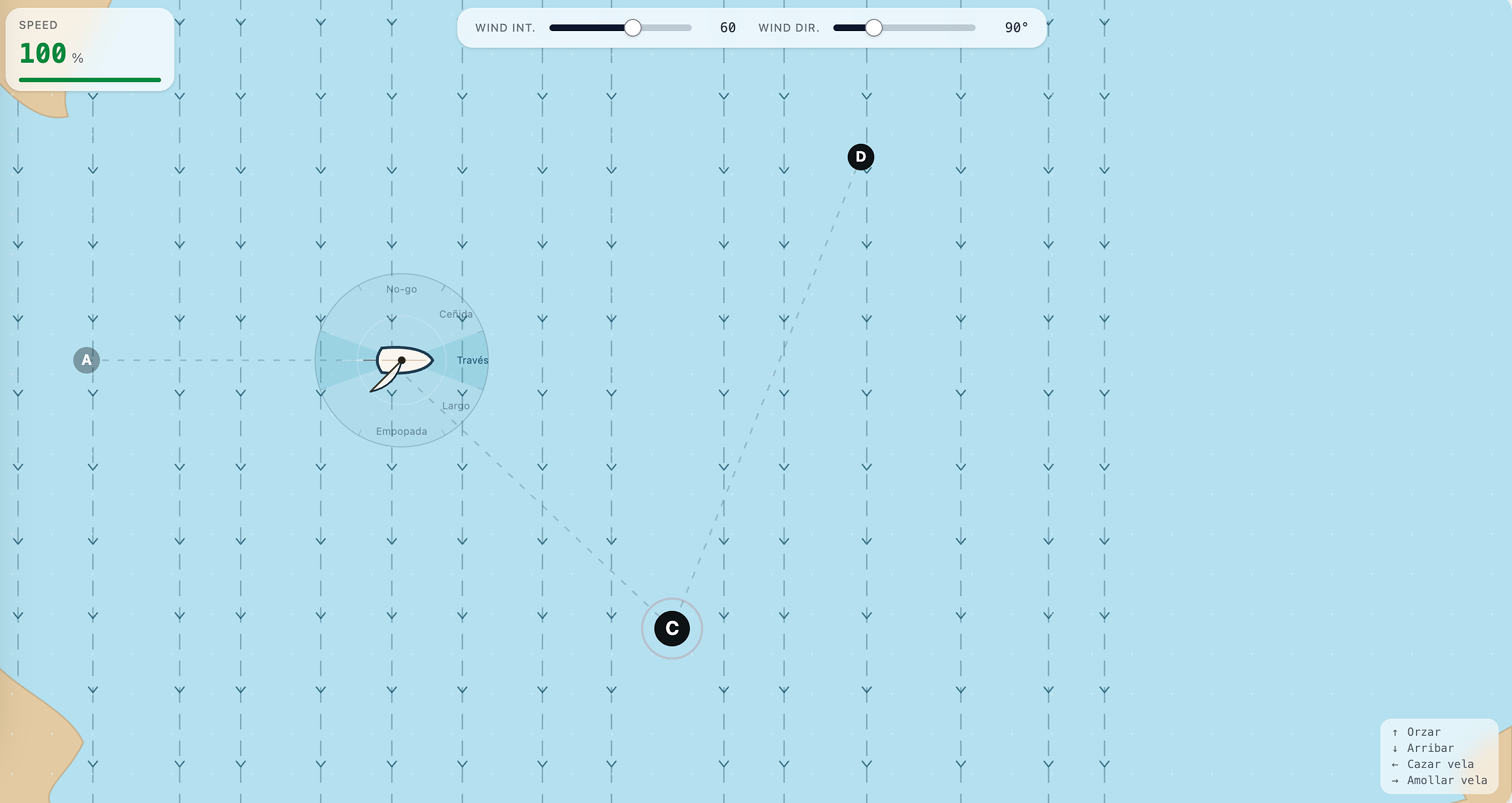
When I started playing the game, I found another problem. You could reach the end of the route quite quickly, but there was nothing telling you that you had achieved the objective. I added a success notification, and in the future, I want to add more dynamic routes so the experience feels more adaptive and alive.
Sail Away taught me that the theory can be correct and the experience can still feel wrong.
It also taught me that, sometimes, you have to lower your own expectations. I didn't need to build the most realistic sailing simulation possible. I needed to build enough for the user to learn.
My website
Not an idea. A clear concept.
I also rebuilt my website this year. AI can be good with a basic layout, but what happens when you want something slightly abstract? I was sceptical, but Lovable proved me wrong.
The lines in the hero represent a brain working with all its interconnections, or a messy system that suddenly starts to organise itself when you find the connections.
The first version of the brain was very simple. It didn't communicate the idea I wanted to transmit. Then came the lines, but it still lacked punch.
For a state to change, you need an idea, a decision, a turning point. And when you start connecting the dots, that is when you transform something. It wasn't until I introduced the lines travelling from one place to another that I was convinced. The movement communicated that it was an active system, dynamic and in motion.
With the right iteration and definition of prompts, you can achieve something really unique. The biggest learning was that Lovable is excellent when you want to design abstract animations, while Claude is more like a frontend developer assistant that makes quick iterations and implements functionality.
And the concept matters. Not an idea. A clear concept.
Building instead of just designing
Throughout all the iterations with ChatGPT, Claude and Lovable, what was revealing was that the designer's judgement still needs to be there if you want to achieve something really specific.
When the idea was clear in my mind, it was much easier to get what I wanted. When I spent many hours iterating, I was normally in exploration mode because I didn't know exactly what I wanted.
At the beginning of the year, I thought that, as a designer, I couldn't build a complex project with functional logic. Or that creating a complex and abstract animation wouldn't be really possible.
Now, I see that if you have a clear concept, not an idea, a clear concept, and you work on it, you can achieve something really unique.
And the biggest learning is that it is not always design first and then AI. Sometimes, AI accompanies you while you discover what you can and cannot do.
At the beginning of the year, I wanted to understand how far I could go. Now, when I think about something I want to build, I no longer think first about whether I can build it.
I think about how I will find my way through.
You can see the live, working results on the Building page.